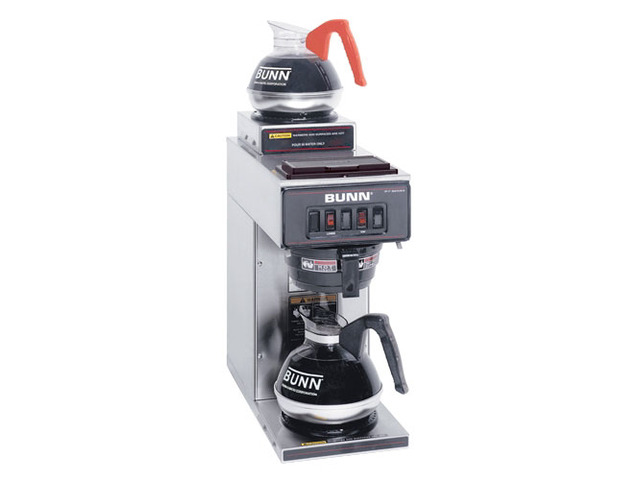
Bunn Coffeemaker 1-2 Cups: Home Brewing Guide
While Bunn coffeemakers like the VP17 and Speed Brew are celebrated for their rapid, full-pot brewing capabilities, adapting them for a perfect 1-2 cup serving at home requires specific adjustments to coffee grounds, water volume, and brewing technique to ensure proper extraction and rich flavor. The key lies in understanding how your Bunn operates and compensating for the smaller batch size to avoid weak or under-extracted coffee.
Understanding Your Bunn's Brewing Heartbeat
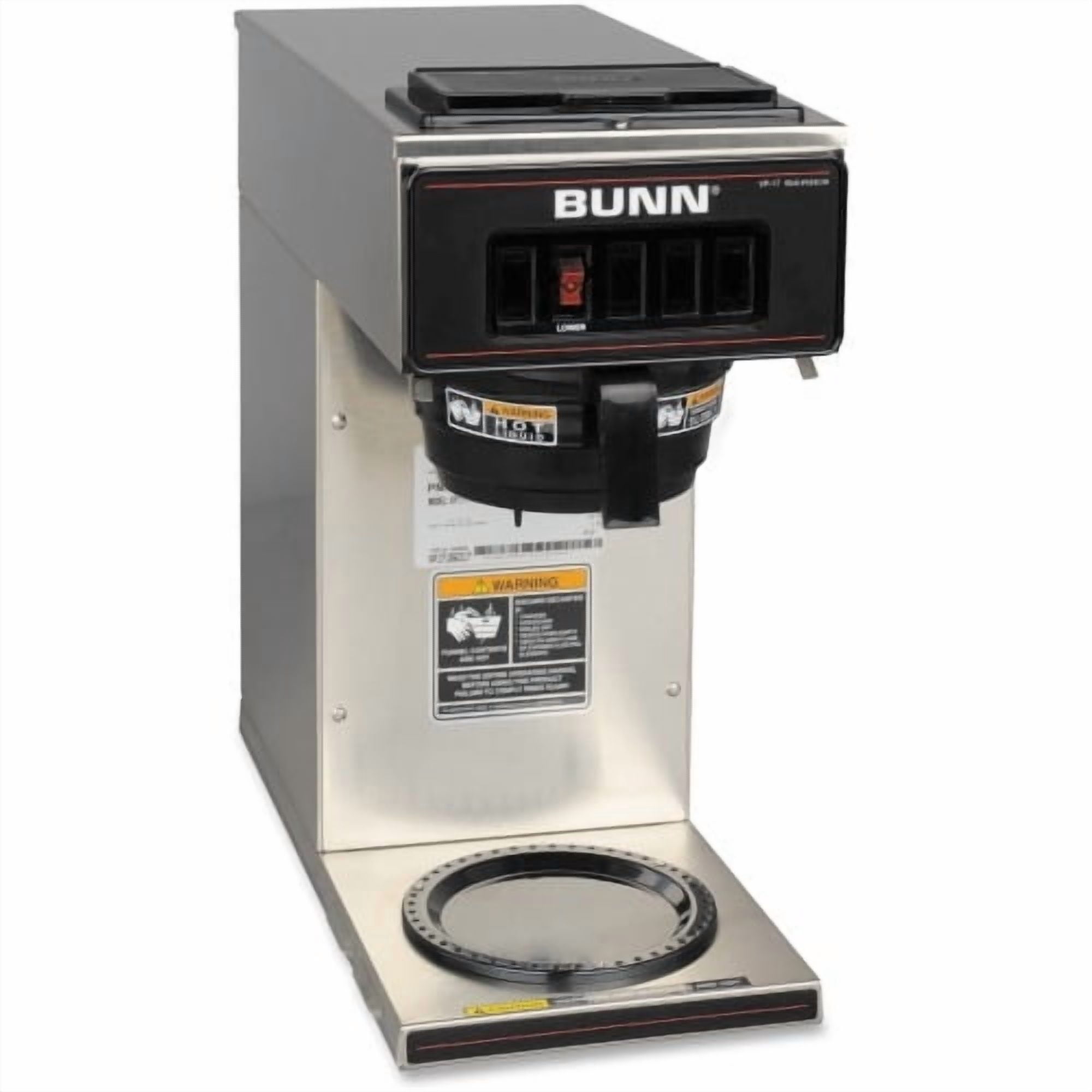
In countless American kitchens, Bunn coffeemakers have earned a reputation for speed and consistency, a feat largely thanks to their ingenious design. Unlike many drip machines that heat water on demand, most Bunn models feature an internal hot water tank that keeps water at an optimal brewing temperature—typically around 200°F (93°C)—24/7.
When you initiate a brew cycle, cold water from your tap is introduced into this hot water tank. This influx of cold water displaces the already-hot water, which is then forced up through a spray head and evenly dispersed over your coffee grounds. This continuous supply of perfectly heated water is what enables Bunn machines to brew a full pot so quickly. For models like the commercial-grade VP17, which are often found in bustling American diners, you pour the cold water into a top reservoir, directly initiating the displacement. Home-oriented Speed Brew models simplify this, pulling water directly from their internal reservoir when you add fresh water.
The Challenge of Small Batches on a Bunn
For many American coffee enthusiasts, the desire for a single, perfect cup is strong, even with a powerhouse Bunn machine. However, brewing just 1-2 cups on a Bunn presents unique challenges that can often lead to a less-than-ideal result. The primary issue stems from the machine's design, which is optimized for larger volumes.
When only a small amount of coffee grounds is in the filter basket, the spray head's broad dispersion might not adequately saturate all the grounds. This can lead to uneven extraction, where some grounds are over-extracted, and others are barely touched. Furthermore, the small volume of hot water passing through the grounds can cool down too quickly, especially when encountering the cooler thermal mass of the filter basket and grounds themselves. This rapid temperature drop results in under-extraction, producing a weak, watery, and often sour-tasting cup of coffee that falls short of the robust flavor Bunn is known for in American homes.

Tailoring Your Bunn for 1-2 Cups: Step-by-Step Guide
Across the United States, home coffee brewing is a cherished ritual, and with a Bunn, you can certainly enjoy a single serving without sacrificing quality. Adapting your Bunn for a smaller brew requires thoughtful technique. Here’s how to do it for different Bunn models:
Method 1: The "Measured Pour" for VP17-Style Machines (Commercial Pour-Over)
The Bunn VP17 is a commercial pour-over model, meaning you manually add the water for each brew. This design gives you more control over smaller batches.
Prerequisites:
- Fresh Coffee Beans: Always start with high-quality, freshly roasted beans.
- Correct Grind Size: A medium-coarse grind is generally ideal for Bunn machines, similar to what you'd use for a standard drip brewer. Too fine, and you risk over-extraction and clogging; too coarse, and your coffee will be weak.
- Accurate Measuring Tools: A kitchen scale for grounds (preferred) and a liquid measuring cup for water are essential.
- Bunn-Specific Filters: Use the taller, flat-bottomed Bunn filters to prevent overflow with a larger coffee bed.
Steps:
- Warm Up Your Carafe: If your carafe is cold, it will rapidly cool your small brew. Pour some hot water (from your tap or kettle) into the carafe, swirl it around, and then discard it. This simple step can make a big difference in the final coffee temperature.
- Measure Your Coffee Grounds: For a strong 1-2 cup brew (approximately 8-16 oz), aim for about 2 tablespoons (around 10-12 grams) of coffee grounds per 6 oz of water. For a 12 oz cup, this would be roughly 4 tablespoons (20-24 grams). Place the grounds evenly into a Bunn filter in the brew basket.
- Pre-Wet the Grounds (Optional, but Recommended): To enhance extraction, you can briefly pre-wet the grounds. Carefully pour a small amount (about 2-3 tablespoons) of hot water (from a kettle or carefully from the Bunn's spray head if it allows) over the grounds, just enough to saturate them. Let them "bloom" for about 30 seconds. This helps release gases and ensures a more even extraction.
- Measure Your Cold Water: Fill your measuring cup with the exact amount of cold water you want to brew (e.g., 12 oz for a standard mug, 16 oz for a larger serving).
- Pour Water into the Reservoir: Carefully pour the measured cold water into the top reservoir of your VP17. The machine will immediately begin dispensing hot water.
- Observe and Enjoy: Watch as your perfectly measured brew drips into your pre-warmed carafe or mug.
Signs of Success:
- Rich Aroma: A strong, pleasant coffee smell during and after brewing.
- Balanced Flavor: The coffee tastes full-bodied, not weak or sour, with no overwhelming bitterness.
- Good Temperature: The coffee is hot enough to enjoy immediately.
What to Do When the Process Fails (Weak/Sour Coffee):
- Adjust Coffee-to-Water Ratio: Increase the amount of coffee grounds slightly.
- Refine Grind Size: Try a slightly finer grind to increase surface area for better extraction.
- Ensure Pre-wetting: Make sure you're pre-wetting the grounds to ensure full saturation.
- Check Water Temperature: While Bunn maintains hot water, ensure your carafe is pre-warmed.
Method 2: Adapting Speed Brew Home Models
Bunn's Speed Brew series (like the BX, GRW, BT, etc.) are designed for home use with an internal reservoir that's always full. This means you can't manually add a small amount of water to the top. Instead, you'll work with the machine's displacement system.
Prerequisites:
- Same as Method 1: Fresh beans, medium-coarse grind, measuring tools, Bunn filters.
Steps:
- Warm Up Your Carafe: As with the VP17, pre-warming your carafe or mug is crucial.
- Measure Your Coffee Grounds: Place the appropriate amount of coffee grounds for 1-2 cups (e.g., 20-24 grams for a 12 oz serving) into a Bunn filter in the brew basket.
- Place Brew Basket and Carafe: Position the brew basket and carafe correctly on the machine.
- Add Measured Cold Water to Reservoir: This is the critical difference. Instead of filling the entire reservoir, you will add only the amount of cold water you wish to brew (e.g., 12 oz for a 12 oz cup) into the top reservoir. This cold water will displace an equal amount of hot water from the internal tank.
- Initiate Brew: Close the reservoir lid. The brewing will begin almost instantly.
- Monitor and Enjoy: Your small batch will brew quickly. Remove the carafe once the dripping stops.
Signs of Success:
- Robust Taste: Coffee has the expected strength and flavor.
- Even Saturation: Grounds appear uniformly wet after brewing.
What to Do When the Process Fails (Weak/Sour Coffee):
- Increase Coffee Grounds: This is often the first adjustment for weak coffee.
- Check Grind Consistency: Ensure your grinder produces an even medium-coarse grind.
- Consider a "Bloom": While harder with Speed Brews, some users lift the lid slightly after a few seconds of brewing to allow a quick bloom, then replace it. Be cautious not to burn yourself.
- Verify Water Temperature: Ensure your Bunn is plugged in and has had ample time to heat its internal tank.

Optimizing Your Small Brew: Variables and Tips
Achieving that perfect cup of coffee in your American home often comes down to mastering a few key variables beyond just the steps. Fine-tuning these elements will elevate your 1-2 cup Bunn brew to perfection.
Coffee-to-Water Ratios
This is perhaps the most critical variable. For Bunn coffeemakers and smaller batches, you'll generally want to err on the side of slightly more coffee than standard drip recipes. A good starting point for a stronger small brew is the "Golden Ratio," which is 1:15 to 1:17 (coffee to water by weight).
- For a 12 oz (355ml) serving:
- Approx. 20-24 grams of coffee (about 4 heaping tablespoons)
- 355 ml of water
- For an 8 oz (237ml) serving:
- Approx. 14-16 grams of coffee (about 3 heaping tablespoons)
- 237 ml of water
Tip: Always measure coffee by weight for precision. If using tablespoons, make them heaping.
Grind Size Adjustments
The ideal grind for a Bunn is medium-coarse. However, for smaller batches, you might find that a slightly finer grind (closer to medium, but not espresso fine) helps compensate for potentially shorter contact times with the water.
- Too Coarse: Water flows through too quickly, leading to under-extraction and weak, sour coffee.
- Too Fine: Water flow is restricted, leading to over-extraction, bitterness, and potential clogging.
- Recommendation: Experiment with small adjustments. Grind your coffee fresh just before brewing for the best results.
Filter Basket Preparation
Even with a small amount of coffee, proper filter basket prep can make a difference.
- Use Bunn Filters: These are designed to be taller and have a flat bottom, which helps keep the coffee bed even.
- Evenly Distribute Grounds: Gently shake the brew basket to level the coffee grounds. This ensures hot water saturates them uniformly.
- Consider a "Coffee Sock" or Reusable Filter (with caution): While Bunn filters are standard, some users find that a reusable filter (like a gold-tone one) or a "coffee sock" (a cloth filter) can offer slightly different flow rates and potentially better extraction for very small batches. Ensure any alternative filter is compatible and doesn't impede water flow or cause overflow.
Common Mistakes and How to Avoid Them
Even with the robust design of Bunn coffeemakers, often found in American diners and homes alike, common pitfalls can occur when attempting to brew a single serving. Being aware of these missteps can save you from a disappointing cup.
- Too Little Coffee: The most frequent mistake. Assuming standard ratios for larger pots will result in a weak, flavorless brew for 1-2 cups.
- Avoid: Always measure your coffee precisely, aiming for a slightly higher ratio (more coffee per ounce of water) for smaller batches.
- Incorrect Grind Size: Using coffee that's too fine can lead to over-extraction and bitterness, while a grind that's too coarse results in under-extraction and weakness.
- Avoid: Stick to a medium-coarse grind for your Bunn. If your coffee is weak, try slightly finer; if bitter, slightly coarser. Invest in a good burr grinder for consistency.
- Not Pre-Wetting Grounds (for pour-over models): Skipping the "bloom" phase, especially with the VP17, means you're missing an opportunity for better flavor development.
- Avoid: For VP17 models, a quick pre-wetting bloom allows gases to escape, leading to a more even extraction. For Speed Brews, while harder, some people attempt a brief partial lift of the lid.
- Cold Carafe/Mug: A cold vessel will rapidly strip heat from your small brew, making it lukewarm.
- Avoid: Always pre-warm your carafe or mug with hot water before brewing.
- Ignoring Bunn's Minimum Volume: While we're adapting for 1-2 cups, some Bunn models might struggle with extremely low volumes (e.g., less than 8 oz) due to spray head design.
- Avoid: If you consistently get poor results with tiny amounts, consider brewing a minimum of 8-12 oz and saving any extra in a pre-warmed thermos for later.
- Restricting Water Flow (Hazardous): Do not attempt to restrict the water flow from the spray head or modify the machine's internal mechanics to "slow down" the brew. This can be dangerous and damage your machine.
- Avoid: Work with the machine's intended flow rate. Adjustments should only be made to coffee amount, grind, and water input (for pour-over models).
- Infrequent Cleaning: Mineral buildup can affect brew consistency and taste, especially with smaller volumes where any imbalance is more noticeable.
- Avoid: Regularly descale your Bunn according to the manufacturer's instructions, particularly if you have hard water.
FAQs About Brewing Small Batches on a Bunn
Here are answers to some common questions American coffee lovers have about brewing 1-2 cups on their Bunn coffeemaker.
Can I use single-serve pods or K-Cups in my Bunn?
No, standard Bunn coffeemakers like the VP17 and Speed Brew are not designed to use single-serve pods or K-Cups. They are traditional drip coffee makers that require ground coffee and a filter. While there might be third-party adapters for some specific models, they are not officially supported and may not provide optimal results or prevent machine damage.
Will brewing small batches damage my Bunn coffeemaker?
Generally, no. As long as you are using the machine as intended—adding water to the reservoir (or pouring it in for VP17-style models) and not attempting to restrict the water flow from the spray head or modify internal components—brewing smaller amounts of coffee will not damage your Bunn. The internal hot water tank system is designed to handle displacement, regardless of the volume of cold water added (within the machine's operational limits).
What's the best coffee type for small Bunn brews?
For the best results, use freshly roasted, whole bean coffee that you grind just before brewing. A medium-dark to dark roast often stands up well to the Bunn's rapid brewing method, providing a robust flavor even in smaller quantities. Avoid pre-ground coffee if possible, as it stales quickly and often has an inconsistent grind.
How do I clean my Bunn after brewing small quantities?
Cleaning after small brews is the same as after full pots. Regularly cleaning the brew funnel and spray head, and most importantly, descaling the hot water tank is crucial. Mineral buildup can affect the machine's performance and the taste of your coffee. Refer to your Bunn model's manual for specific descaling instructions, usually involving a vinegar solution every 1-3 months, depending on your water hardness.
Can I put less water in the reservoir on all Bunn models?
No. This technique primarily applies to home Speed Brew models where you add water to the top reservoir for each brew, displacing water from an internal hot tank. For commercial pour-over models like the VP17, you manually pour water in for each brew cycle, giving you direct control over the volume. Never attempt to manually reduce the water level in the internal hot water tank of a continuously heated Bunn machine.
Next Action
With these precise adjustments, you can confidently brew 1-2 perfect cups of coffee on your Bunn coffeemaker for your daily enjoyment. Start by accurately measuring your coffee and water, then experiment slightly with grind size and pre-wetting until you find your ideal single-serving strength and flavor.