
Keurig & Distilled Water: Why You Should Avoid It
Keurig machines shouldn't use distilled water because they rely on minerals to detect water levels and brew properly.
When you're craving that perfect cup of coffee, reaching for the purest water might seem like the best idea, right? Many of us, myself included, have wondered about the ideal water for our beloved Keurig brewers. However, the common advice you'll hear from Keurig, and seasoned coffee enthusiasts alike, is a firm "no" to distilled water. If you've ever found yourself puzzled by this recommendation, you're in the right place. We're diving deep into the fascinating reasons why pure distilled water and your Keurig machine aren't the best match, debunking common myths, and revealing the simple science behind it all so you can enjoy consistently great coffee and keep your brewer running smoothly for years to come.
Why Distilled Water is a No-Go for Your Keurig
It might seem counterintuitive to avoid what appears to be the purest form of water for your coffee machine. After all, isn't purity always better? When it comes to Keurig brewers, the answer is a resounding "not necessarily." Distilled water is essentially H2O with almost all impurities, minerals, and salts removed through a process of boiling and condensation. While this makes it excellent for certain applications, like medical uses or preventing mineral buildup in irons, it's actually problematic for the internal workings of your coffee maker.
The main issue boils down to how Keurig machines, and many modern appliances, detect the presence and level of water. They don't just "see" water; they rely on its electrical conductivity. Pure distilled water, lacking dissolved minerals, is a poor conductor of electricity. This lack of conductivity confuses the sensors within your Keurig, leading to a host of operational problems. It's like trying to navigate a dark room without a flashlight – the machine simply can't tell what's going on inside its own reservoir.
The Science Behind the Warning: How Keurigs Detect Water
At the heart of every Keurig brewer is a sophisticated, yet simple, water detection system. These machines utilize electrical probes or sensors located in the water reservoir. These sensors work by sending a small electrical current through the water. For the current to flow, and for the sensors to register that water is present, the water needs to be able to conduct electricity. This is where dissolved minerals, such as calcium, magnesium, and sodium, come into play. These minerals exist as ions in the water, which are electrically charged particles that allow the current to pass.
Think of it like a tiny bridge that needs to be built for information to travel. The minerals in your tap or filtered water create that bridge. Without these essential ions, as is the case with distilled water, the electrical circuit remains open. The sensors get no feedback, and consequently, the machine interprets the reservoir as empty, even if it's full. This isn't a design flaw; it's a fundamental aspect of how these types of sensors operate. My own experience with various water filtration systems taught me early on that not all "pure" water is created equal when it comes to appliances that depend on conductivity.

The Problem with Mineral-Free Water: Beyond Brewing
While the immediate concern with using distilled water in your Keurig is the sensor issue, the problems can extend beyond just an inability to brew. Consistently using water that the machine can't properly detect can lead to a cascade of issues. The Keurig might repeatedly try to initiate brewing cycles, overworking its internal pump and heating element without ever completing the process. This puts undue stress on these critical components, potentially shortening the lifespan of your brewer. Imagine your car trying to start repeatedly but never quite catching — it's not good for the engine!
Furthermore, some argue that entirely mineral-free water can, over time, leach trace amounts of minerals from the machine's internal parts as it seeks to re-mineralize itself. While this effect is typically minimal for short-term use, the primary concern remains operational. Keurig's warranty policies also often stipulate that using non-recommended water types, including distilled water, can void your coverage. This is a crucial point to remember because an invalidated warranty means any future repairs or replacements would come out of your pocket, which definitely isn't ideal when you just want your morning coffee.
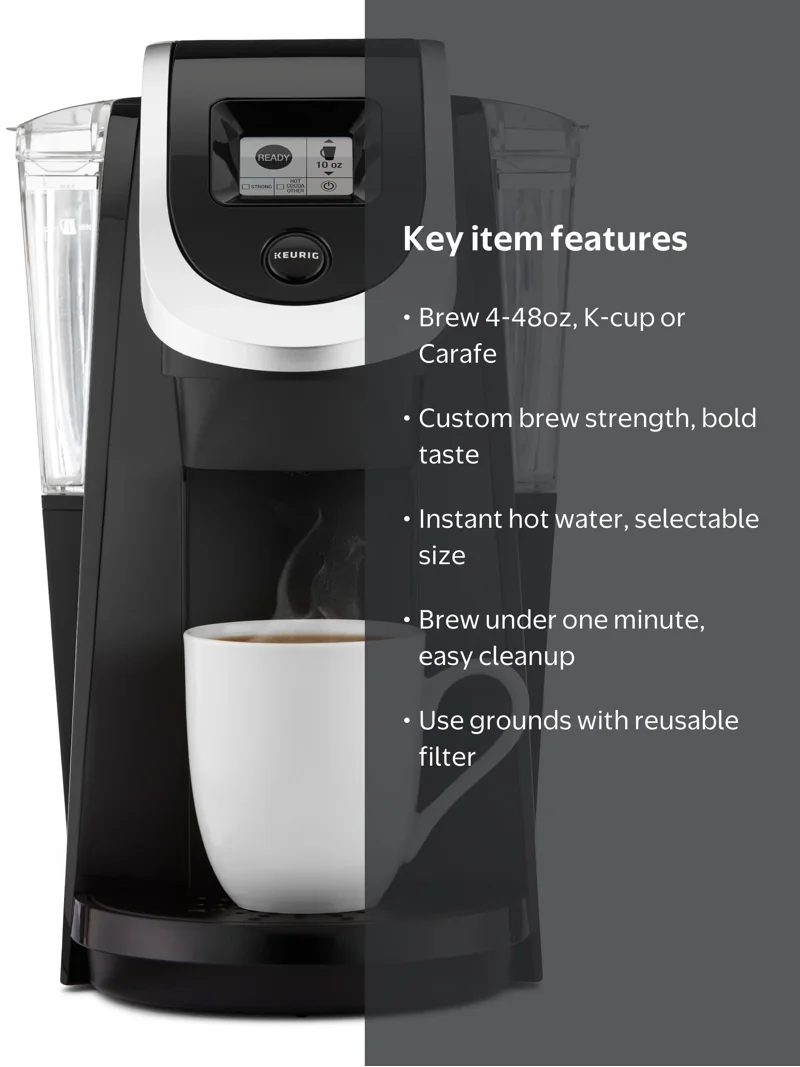 Source: walmart.com
What Happens if You Do Use Distilled Water?
So, what exactly can you expect if you pour distilled water into your Keurig? The most common scenario is that your machine will simply refuse to brew. It will likely display an "Add Water" message or a similar indicator, even though the reservoir is clearly full. The internal sensors, unable to detect any water due to the lack of minerals, will trigger this error, preventing the brewing cycle from starting. You might hear the pump whirring briefly as it attempts to draw water, but it will quickly stop when the sensors don't get the expected feedback.
In some cases, especially with older models or specific sensor designs, the machine might attempt to brew but produce only a partial cup, or operate inconsistently. This is because the sensors might occasionally get a weak signal, leading to interrupted cycles. I once saw a friend struggle with this exact issue; their Keurig would start, make strange noises, and then just stop, leaving them with a half-full mug and a frustrated sigh. The fix? A simple swap to filtered tap water, and the machine was back to normal, happily brewing full cups again. It’s a classic example of why using distilled water in Keurig machines is generally discouraged.

Best Water Choices for Your Keurig
Now that we understand why distilled water is out, what's the best option for your Keurig? The ideal choice strikes a balance between having enough minerals for detection and not having so many that they cause excessive scale buildup.
- Filtered Tap Water: For most homes, this is the gold standard. Using a charcoal filter pitcher, a faucet filter, or a refrigerator's built-in dispenser can remove chlorine, sediment, and other impurities that affect taste, while leaving enough beneficial minerals for your Keurig's sensors. This also helps reduce hard water mineral buildup.
- Bottled Spring Water: This is another excellent option. Spring water naturally contains a balanced mineral content that is perfect for both taste and machine operation. It's typically clean and doesn't pose the issues of distilled water.
- Keurig Water Filters: Many Keurig models come with internal water filters that fit in the reservoir. These charcoal filters are great for improving the taste of your coffee by removing chlorine and odors, and they work perfectly with regular tap water, leaving the necessary minerals intact. Remember, these filters improve taste but don't add or remove minerals to the extent of distillation.
Avoid using reverse osmosis (RO) water unless you specifically know it retains some mineral content. RO water, like distilled water, can be very low in minerals and cause similar detection problems. When considering why do Keurig coffee machines say not to use distilled water, it always comes back to this mineral balance.

Maintaining Your Keurig: Descaling and Water Quality
Choosing the right water is just one piece of the puzzle for a happy, long-lasting Keurig. Regular maintenance, especially descaling, is crucial, and it directly relates to your water quality. Even with filtered tap water or spring water, minerals will inevitably build up over time inside the heating element and water lines. This mineral buildup, known as scale, can restrict water flow, reduce heating efficiency, and ultimately impact the taste of your coffee and the lifespan of your machine.
Keurig recommends descaling your brewer every 3 to 6 months, depending on your water hardness. You can use a Keurig descaling solution or a mixture of white vinegar and water. The descaling process flushes out these mineral deposits, ensuring your machine can heat water properly and maintain consistent brew temperatures. My personal routine involves descaling quarterly, especially since I live in an area with moderately hard water. It's a small effort that makes a huge difference in preventing issues that might tempt you to think about using "purer" — but ultimately problematic — water like distilled water.
Personal Experience: Learning the Hard Way (or the Smart Way)
I've been a coffee aficionado for years, and like many, I initially thought that "purer" water meant "better" coffee and a cleaner machine. Early in my Keurig journey, before I truly understood the intricacies of appliance mechanics, I actually experimented with using water from my reverse osmosis filter system. I figured, "It's cleaner, so it must be good!" The result? A very confused Keurig that stubbornly displayed an "Add Water" message, despite the reservoir being full. I spent a frustrating morning troubleshooting, unplugging, replugging, and even Googling error codes, convinced my brand-new machine was faulty.
It wasn't until a quick call to Keurig's customer service, where a very patient representative explained the conductivity issue, that the lightbulb went off. My RO water, like distilled water, was too pure, too mineral-deficient for the sensors to work. Switching back to filtered tap water immediately resolved the problem. It was a simple fix, but a powerful lesson. This personal experience really hammered home why do Keurig coffee machines say not to use distilled water and why understanding your appliance's needs is just as important as the quality of your ingredients. It’s about working with your machine, not against it, for that perfect morning brew.

Frequently Asked Questions
Can I mix distilled water with tap water in my Keurig?
While technically possible, it's generally not recommended. Mixing distilled water with tap water can dilute the mineral content, potentially still causing detection issues or leading to inconsistent brewing. It's better to stick with consistently mineral-rich water like filtered tap or spring water.
Will using distilled water void my Keurig warranty?
Yes, using distilled water can potentially void your Keurig warranty. Most manufacturers specify the type of water recommended, and using distilled or reverse osmosis water often falls outside these guidelines because it can lead to operational problems and component stress.
What kind of water is best for Keurig machines?
The best water for Keurig machines is filtered tap water or bottled spring water. These options provide enough natural minerals for the machine's sensors to detect water levels while minimizing the buildup of excessive scale, ensuring optimal performance and taste.
How often should I descale my Keurig?
You should descale your Keurig brewer every 3 to 6 months. The exact frequency depends on the hardness of your local water supply and how often you use the machine. Regular descaling prevents mineral buildup and keeps your machine running efficiently.
Can I use filtered water from my fridge dispenser in my Keurig?
Absolutely! Filtered water from your refrigerator dispenser is usually an excellent choice for your Keurig. These filters remove impurities that affect taste but typically leave sufficient minerals for the brewer's sensors to function correctly.
Conclusion
Understanding why do Keurig coffee machines say not to use distilled water is key to getting the most out of your brewer and ensuring it lasts for years. It's not about purity in the general sense, but about the specific functional requirements of the machine's water detection system, which relies on the electrical conductivity provided by dissolved minerals. By opting for filtered tap water or spring water, you're not only safeguarding your Keurig from operational issues and potential warranty invalidation, but you're also setting yourself up for consistently delicious coffee. Make the smart choice for your machine and your daily brew!
Do you have a favorite water type you use for your Keurig, or a story about learning this lesson the hard way? Share your insights in the comments below, and explore our other guides for more tips on maximizing your coffee experience!

One Comment